Forget traditional banking services and brick-and-mortar limitations. The future of finance is here, driven by innovation and disrupting everything from how we manage money to how we tackle everyday tasks like expense management. Welcome to the dynamic world of fintech, where a new breed of companies is reshaping how we make payments, access financial services, and even keep track of our spending. This guide dives deep into the top players in this exciting space, explores the booming United Kingdom fintech scene, and unveils the key concepts that are revolutionizing financial planning for individuals and businesses alike. Buckle up and get ready to explore the future of finance – dominated by the ingenuity of fintech!
Defining Fintech: Where Finance Meets Technology

Gone are the days of limited financial options and cumbersome processes. Financial business entities and private companies, a powerful blend of finance and technology, are reshaping the landscape. But what exactly is a fintech company?
At its core, a fintech company leverages technology to innovate and improve traditional financial services. These companies utilize cutting-edge tools like:
Artificial Intelligence (AI):Leveraging artificial intelligence personalizes financial experiences, automates tasks, and detects fraud. Imagine an AI-powered budgeting app that analyzes your transaction history and suggests strategies for your financial planning.
Blockchain: This secure technology underpins digital assets but also offers potential for secure transactions, streamlined record-keeping, and improved transparency.
Cloud Computing: Cloud-based solutions provide companies with scalability, flexibility, and robust data storage capabilities.
Big Data Analytics: By analyzing vast amounts of information, financial tech companies can offer personalized financial products, assess risk more effectively, and predict market trends.
These technologies empower a financial technology company to create a more accessible, efficient, and user-friendly financial experience for individuals and businesses alike.
Top Fintech Companies: Shaping the Future of Finances
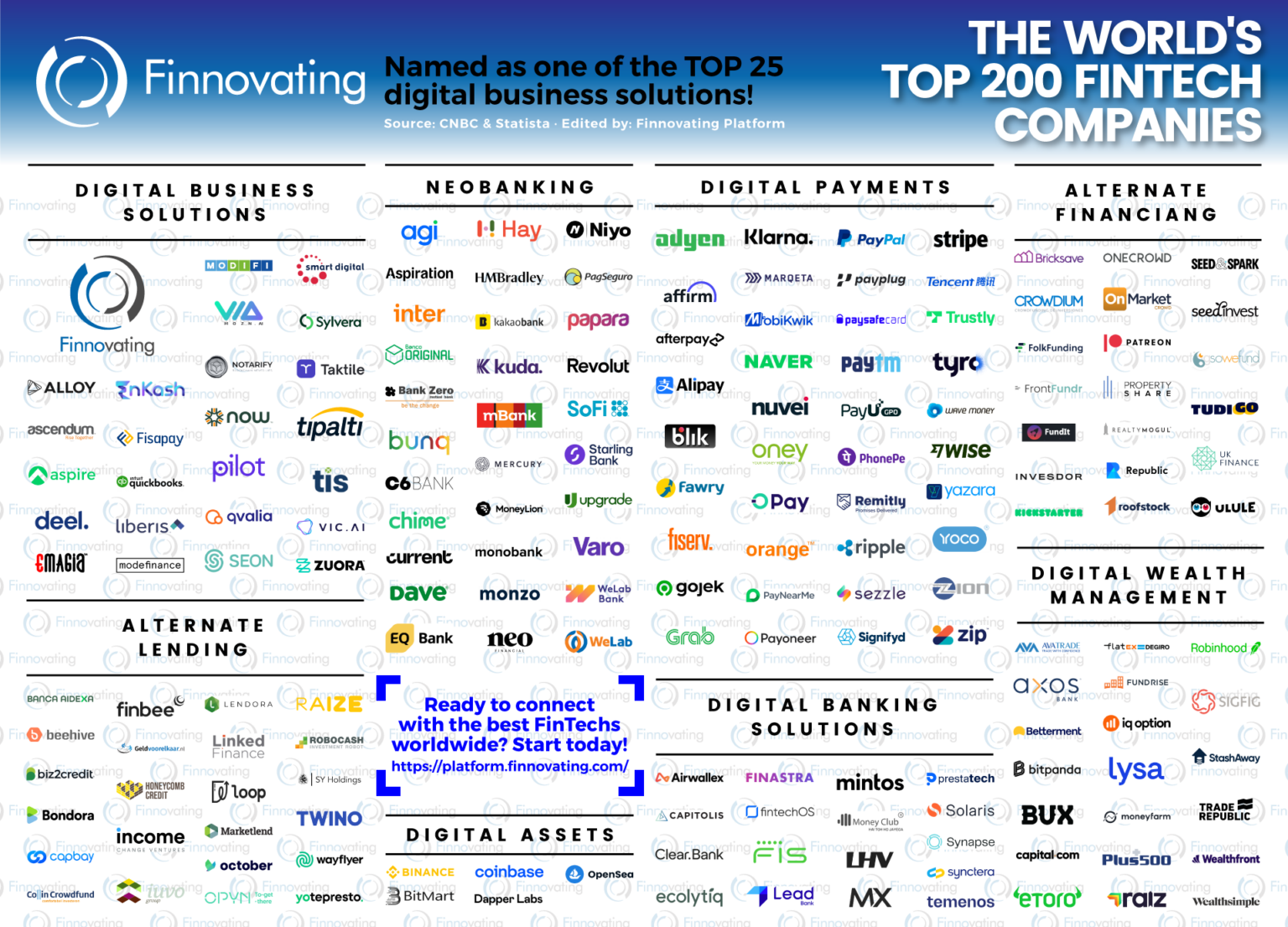
Source: Finnovating
The fintech landscape is a dynamic ecosystem teeming with innovative business institutions, all striving to revolutionize the financial experience. Some, however, have emerged as prominent players, wielding significant influence and shaping the future of finance. Let’s delve into the world of these leading companies and explore the giants of the industry.
Identifying the Market Leaders
Determining the absolute “biggest” fintech company can be nuanced. However, by looking at market capitalization (a metric reflecting a company’s total market value), we can identify established leaders. The current dominant player in the global fintech arena, based on market capitalization, holds a significant position within the industry.
Another approach to identify prominent players is to look at investment firms focused on the fintech sector. Augmentum Fintech, a publicly listed venture capital firm, invests in promising early and later-stage fintech businesses across the globe. The companies within Augmentum Fintech’s portfolio are strong indicators of the innovative trends shaping the future of finance. By following Augmentum Fintech’s investments, we can stay up-to-date on emerging players and disruptive technologies within the fintech landscape.
A Landscape of Innovation
Beyond a single leader, the fintech landscape thrives on diversity. As highlighted in a recent Forbes article on large financial institutions (https://www.forbes.com/advisor/investing/top-fintech-companies/), funding rounds are another indicator of a company’s potential and growth trajectory. Several prominent players are shaping the future of financial services.
Top 5 Fintech Companies by Funding (as of April, 2024)
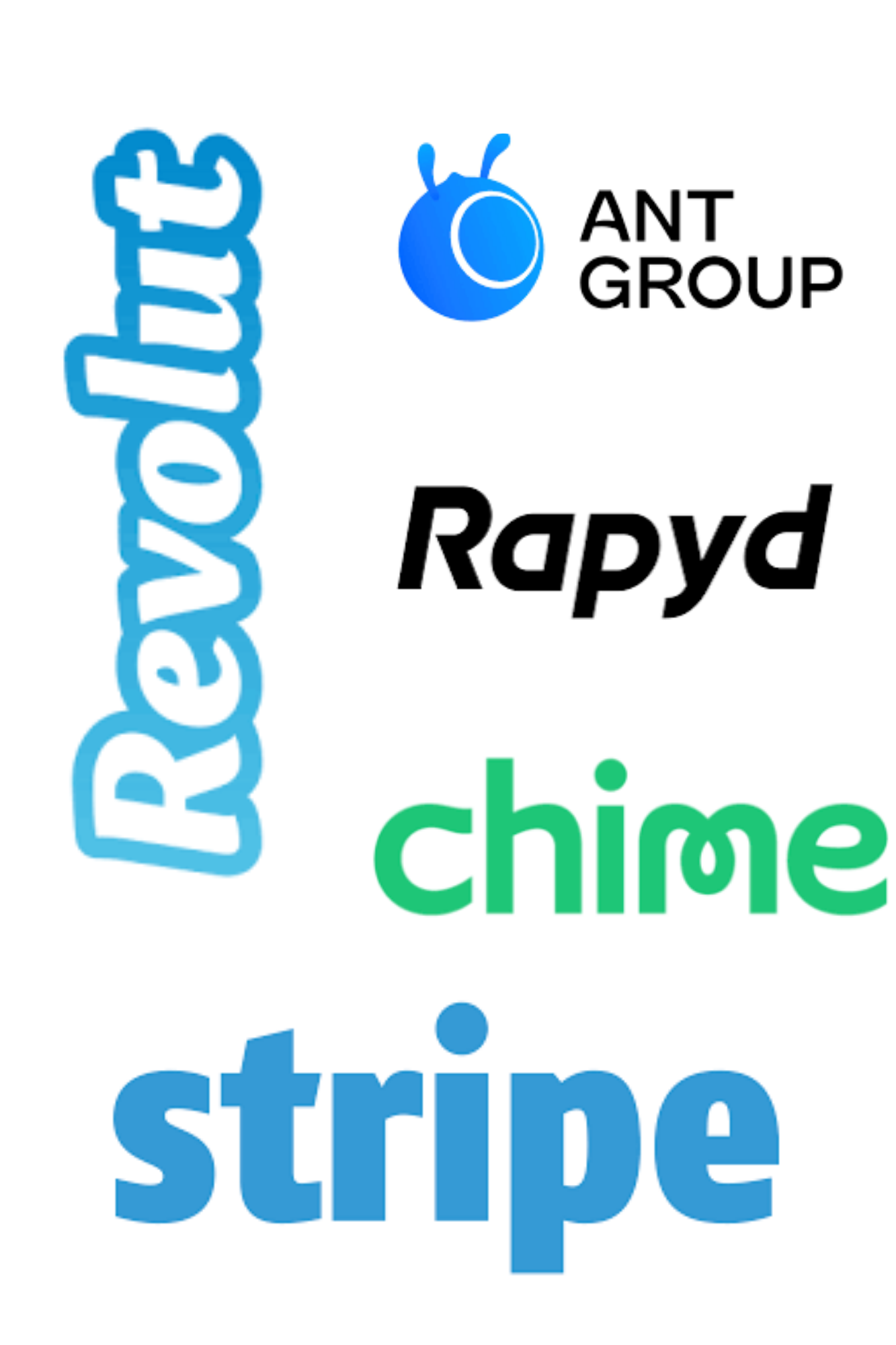
This list showcases companies that have secured substantial investments, reflecting their growth potential and impact on the industry.
Ant Group (Fund: $78.5 billion): Leading the pack with its significant funding and diverse financial services, including digital payments, wealth management, and lending.
Stripe, Inc. (Fund: $50 billion): Renowned for its online payment processing platform, catering to businesses of all sizes and facilitating e-commerce transactions worldwide.
Revolut (Fund: $33 billion): Offers a range of financial services, including online bank services, currency exchange, and investment options, with a focus on digital banking solutions.
Chime Financial, Inc. (US) provides mobile banking services, while UK challenger banks like Monzo and Starling Bank offer similar features geared towards young adults, such as early salary access and fee-free overdrafts, sometimes even including features specific to renting a flat in the UK.
Rapyd (Fund: $15 billion): Specializes in global fintech solutions, enabling business entities to accept payments, disburse funds, and manage compliance on a global scale.
Beyond Funding: These companies, alongside other prominent players, showcase innovation and disruption within the financial sector. They leverage technology to enhance accessibility, efficiency, and user experience, shaping the future of finance.
The United Kingdom Fintech Ecosystem: A Hub of Innovation

The United Kingdom is a global powerhouse in the ever-evolving world of fintech. This section delves into the thriving United Kingdom fintech ecosystem, exploring its size, ranking, and the unique areas it excels in.
Fueling Innovation: Venture Capital and the UK Advantage
Adding to the United Kingdom’s strengths, prominent venture capital firms like Augmentum Fintech and Balderton Capital are headquartered in London. Their focus on investing in innovative fintech businesses further solidifies the United Kingdom’s position as a global leader in fostering fintech advancements. These firms not only attract promising fintech startups to the United Kingdom but also fuel the growth of the domestic ecosystem by providing crucial investment capital.
Estimating the UK Fintech Powerhouse
Determining the exact number of UK fintech companies can be challenging. However, estimates suggest a vibrant ecosystem with well over 2,500 companies. The UK fintech companies are actively shaping the financial landscape, offering innovative solutions and fostering a culture of progress.
Challenger Banks and Beyond: A Diverse Landscape
The UK’s thriving fintech ecosystem extends beyond just mobile banking and open banking. Here are some additional areas where innovation is flourishing:
Challenger Banks: UK challenger banks like Monzo, Starling Bank, and Revolut have disrupted the traditional banking sector by offering innovative mobile-first experiences. These banks typically focus on a specific demographic or niche, providing tailored features and competitive rates.
SME-focused Solutions: Fintech entities like Tide cater specifically to small and medium-sized enterprises (SMEs). Their platforms streamline financial management for SMEs, helping save small businesses time and money on banking and admin tasks, allowing them to focus on core business activities.
By fostering a diverse range of innovative companies, the UK fintech ecosystem caters to a broad spectrum of users and businesses, solidifying its position as a global leader in financial technology.
A Global Fintech Leader: Factors Contributing to Success
The United Kingdom consistently ranks among the top fintech hubs globally. This position is attributed to several factors:
Government Support: The United Kingdom government actively supports the fintech sector through initiatives, regulatory frameworks, and funding programs.
Culture of Innovation: The United Kingdom boasts a strong culture of innovation, attracting entrepreneurs and fostering collaboration between established institutions and new fintech players.
Skilled Workforce: The United Kingdom has a deep pool of talented individuals with expertise in finance, technology, and regulation, crucial for driving the fintech sector forward.
Unique Strengths of UK Fintech
Beyond its impressive size and ranking, the United Kingdom fintech ecosystem thrives in several specific areas:
Mobile Banking: The United Kingdom is a leader in mobile devices banking adoption, with many consumers utilizing smartphones and tablets for everyday banking tasks.
Challenger Banks: UK challenger banks like Monzo, Starling Bank, and Revolut have disrupted the traditional banking sector by offering innovative mobile-first banking experiences.
Open Banking: The United Kingdom is at the forefront of open banking, a system that allows customers to share their financial details securely with third-party applications, fostering a more connected and competitive financial services landscape.
Regtech: The United Kingdom is a hub for regtech (regulatory technology) companies, developing innovative solutions to help financial institutions comply with complex regulations.
By identifying these core strengths, we gain a deeper understanding of what makes the United Kingdom fintech ecosystem such a driving force in the global financial arena.
From Personal Finance Apps to Powerful Platforms: A Spectrum of Fintech Solutions
Fintech solutions aren’t a one-size-fits-all proposition. This section dives into the diverse range of services offered by innovative business entities, empowering both individuals and businesses to navigate their finances with greater ease and efficiency.
Expense Management: Taking Control of Your Money

Source: Freepik
Gone are the days of cumbersome spreadsheets and overflowing envelopes. Today, a multitude of personal finance management (PFM) apps and platforms empower individuals to take control of their finances. These user-friendly tools offer features like:
Budgeting Tools: Set spending goals, categorize expenses, and track progress towards financial objectives.
Investment Options: Explore investment opportunities tailored to your risk tolerance and financial goals. Some platforms even provide automated investing (“robo-advisors”) based on your personalized profile.
Expense Tracking: Gain valuable insights into spending habits by automatically categorizing transactions and identifying areas for potential savings.
Payments and Money Transfers: Moving Money Seamlessly

Source: Freepik
The way we pay and transfer money has been revolutionized by fintech progress. Business entities in this space offer a variety of solutions, including:
Online Payments: Secure and convenient online payment processing for purchases and bill payments.
International Money Transfers: Send and receive money internationally at competitive exchange rates and with lower fees compared to traditional methods.
Mobile Wallets: Store your debit and credit cards securely on your smartphone for contactless payments at participating merchants.
Lending and Alternative Finance: Unlocking New Funding Avenues

Source: Freepik
Fintech has opened doors for alternative lending options, providing individuals and businesses with greater access to capital. Here are some examples:
Peer-to-Peer (P2P) Lending: Borrow money directly from a pool of investors, often at more competitive interest rates than traditional loans.
Alternative Lending for Small Businesses: Financial tech companies cater specifically to small businesses, offering loan products designed to meet their unique needs and growth aspirations.
Innovative Loan Products: Explore new loan options tailored to specific needs, such as student loans, auto loans, or home improvement loans, often with streamlined application processes and faster approvals.
Investment and Wealth Management: Growing Your Wealth for the Future

Fintech platforms are making investment opportunities more accessible than ever before. Here are some of the ways they empower individuals:
Robo-advisors: Automated investment management services based on your risk tolerance and financial goals.
Fractional Share Investing: Invest in fractions of shares, making it easier to build a diversified portfolio even with limited funds.
Digital Wealth Management Tools: Access a suite of tools and resources to research investments, track your portfolio performance, and make informed investment decisions.
Empowering Businesses: Streamlining Operations and Boosting Growth
Fintech solutions extend beyond personal finance, offering businesses a powerful toolkit to manage their finances and operations more efficiently. Let’s explore some key areas where fintech empowers businesses.
Business Banking Platform
Streamline account management, automate payments and collections, and integrate seamlessly with accounting software for a holistic view of company finances.
Accounting Software Integrations
Eliminate manual data entry and ensure seamless information flow between your business banking platform and accounting software.
Automated Invoicing Solutions
Save time and improve cash flow management with automated invoice generation and sending, with features like online payments and reminders.
Inventory Management Tools
Gain real-time insights into inventory levels, optimize stock levels, and automate purchase orders – all tailored to your specific industry needs.
By leveraging these diverse fintech solutions, both individuals and businesses can navigate the financial landscape with greater confidence and achieve their financial goals.
Decodng the Fintech Marketing Landscape: Strategies for Growth

Source: Freepik
Crowning a single “best” fintech company is a challenge. However, several stand out for their innovative approaches and marketing prowess. These high-flyers not only attract users but also secure impressive funding rounds, fueling their continued development and market disruption. Understanding their marketing strategies offers valuable insights for Bandera Agency and other marketing specialists navigating the dynamic fintech space.
Marketing Strategies for Fintech Success:
Building Brand Trust and Transparency: In a landscape where security and user data are paramount, building trust is essential. Top fintech service providers achieve this through transparent communication, robust security measures, and a commitment to data privacy. This strong foundation is crucial for attracting users and investors alike.
Leveraging Content Marketing and Thought Leadership: Providing valuable educational content, establishing thought leadership, and engaging with the target audience through informative blogs, articles, and social media content positions these companies as trusted resources within the financial services ecosystem. This not only builds trust but also positions them favorably for future funding rounds.
Harnessing the Power of User Experience (UX) Design: Fintech solutions live and die by their user experience. Top companies prioritize intuitive and user-friendly interfaces, ensuring a seamless and engaging experience across all platforms (desktop, mobile app, etc.). A positive UX not only keeps users engaged but also translates to positive reviews and increased user acquisition, potentially leading to even stronger performance in subsequent funding rounds.
Data-Driven Marketing and Targeting: Utilizing data analytics to understand customer behavior and preferences allows these companies to personalize marketing messages, target specific demographics effectively, and optimize campaign performance. Data-driven marketing not only maximizes marketing ROI but also provides valuable insights that can be used to refine product offerings and features, potentially leading to a more attractive proposition for future investors.
Building a Strong Community: Fostering a sense of community goes beyond simply acquiring customers. Top companies strive to create a loyal user base by engaging with them on social media, providing excellent customer service, and incorporating gamification elements where relevant. A strong and engaged community strengthens brand loyalty, attracts new users through positive word-of-mouth, and can position the company for a more successful future, potentially influencing future funding rounds.
By mastering these marketing strategies, fintech companies can not only build a loyal user base but also position themselves for long-term success. This strong foundation paves the way for attracting new users, achieving sustainable growth, and potentially securing even more impressive funding rounds in the future. Ultimately, these strategies empower fintech companies to become trusted partners in their users’ financial lives, influencing not just current financial decisions but also future purchases and long-term financial planning.
Ready to harness the power of fintech marketing? Contact Bandera Agency today to discuss your unique goals and develop a winning strategy.
Traditional vs. Fintech: Blurring the Lines

The lines between traditional financial institutions and fintech companies are becoming increasingly blurry. Let’s explore this concept through the lens of Capital One and Barclays, and delve into the future of fintech.
Is Capital One a Fintech Company?
Capital One, established in 1994, might not be considered a pure-play fintech company in the strictest sense. However, it has demonstrably embraced fintech solutions. Here’s why:
Digital Banking Focus: Capital One prioritizes digital banking experiences with user-friendly mobile apps and online banking platforms.
Investment in Fintech Ventures: Capital One Ventures actively invests in financial technology companies, demonstrating a commitment to innovation and staying at the forefront of the evolving financial landscape.
Adoption of Fintech Solutions: Capital One integrates various fintech solutions, like AI-powered tools for budgeting and fraud prevention, into their services.
Barclays and Tech Integration:
Barclays, a well-established bank founded in 1690, is another example. While not solely a financial technology company, Barclays actively incorporates technology:
Digital Transformation Initiatives: Barclays invests heavily in digital transformation initiatives, offering innovative mobile banking features and contactless payment solutions.
Partnerships with Fintech Firms: Barclays collaborates with fintech companies to leverage cutting-edge technologies and enhance their service offerings.
These examples highlight how established financial institutions are adapting and integrating fintech solutions, blurring the lines between traditional and new-age finance.
Challenges Facing Fintech:
Despite its disruptive potential, the fintech industry faces challenges:
Regulation and Compliance: Regulation and Compliance: Balancing innovation with regulatory compliance can be complex, requiring fintech companies to navigate an ever-evolving legal landscape. This can be particularly challenging for areas like open banking and alternative payment methods (which could potentially disrupt traditional methods like direct debit).
Cybersecurity and Data Privacy: As fintech companies handle sensitive financial data, robust cybersecurity measures and a commitment to data privacy are crucial.
Competition from Traditional Institutions: Established financial institutions with vast resources are increasingly adopting fintech solutions, creating a more competitive environment.
The Future of Fintech: A Glimpse Ahead

Source: Freepik
The future of fintech is brimming with exciting possibilities:
Blockchain and Cryptocurrencies: The potential of blockchain technology and cryptocurrencies to reshape financial transactions and record-keeping is significant.
Embedded Finance: The seamless integration of financial services within non-financial applications (e.g., buying insurance within a travel booking app) holds immense promise.
AI for Personalized Finance: Artificial intelligence can personalize financial advice, streamline tasks, and enhance fraud prevention measures.
By navigating challenges and embracing innovation, fintech has the potential to revolutionize the way we manage money. As traditional institutions adapt, the future of finance will likely be a collaborative space driven by both established players and innovative fintech companies.
Conclusion
Fintech is shaking up finance with innovative solutions for individuals and businesses, fostering financial inclusion for all. From personal financing apps to powerful business platforms, Fintech empowers users to manage money with greater ease. But this exciting landscape also faces challenges like regulations and cybersecurity.
The future of Fintech is bright, with blockchain, embedded finance, and AI poised to revolutionize money management further. As traditional institutions adapt and collaborate, finance is poised to become more accessible and personalized.
Ready to leverage Fintech? Bandera Agency crafts targeted marketing strategies for Fintech businesses. Contact us today and unlock your growth potential!