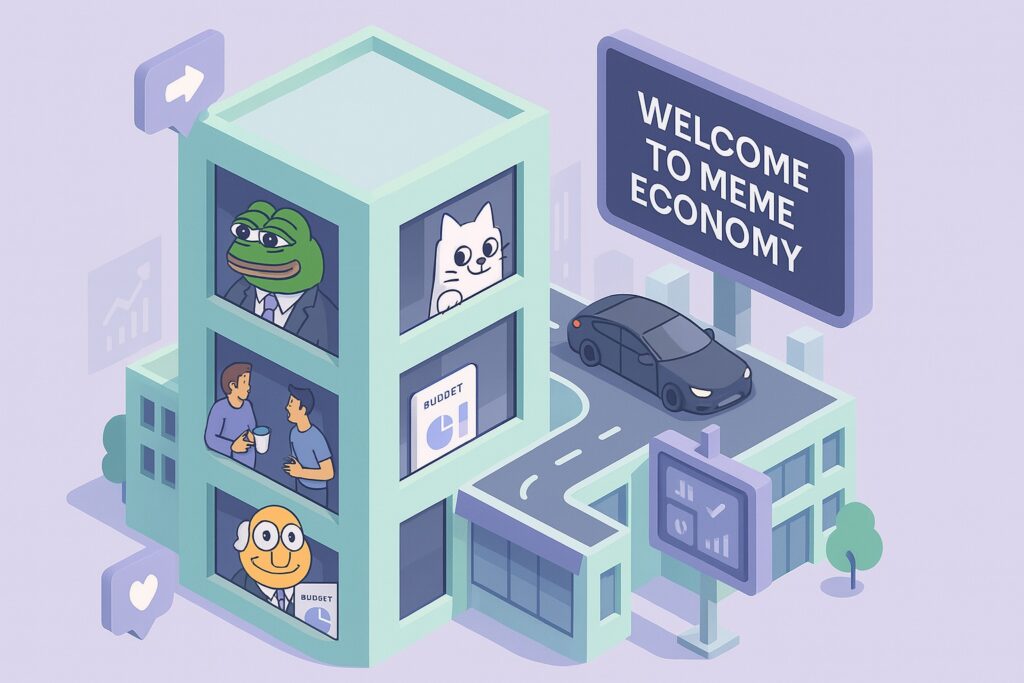
In the race for attention, memes have become an unlikely but effective asset, particularly in fintech marketing.
A New Grammar of Persuasion
Once the preserve of internet subcultures, memes have become a lingua franca of online expression. Their migration into mainstream advertising reflects a shift in how brands, including those in sober sectors such as finance, attempt to engage audiences. What began as ironic images shared in private group chats has evolved into a form of commercial creative with measurable impact.
Where once banks sought gravitas, they now seek shareability. Where compliance once dictated tone, relatability now shapes content. The result is a marketing landscape where a cartoon bear or a still from a Korean dystopia might sell you a current account.
Why Memes Work
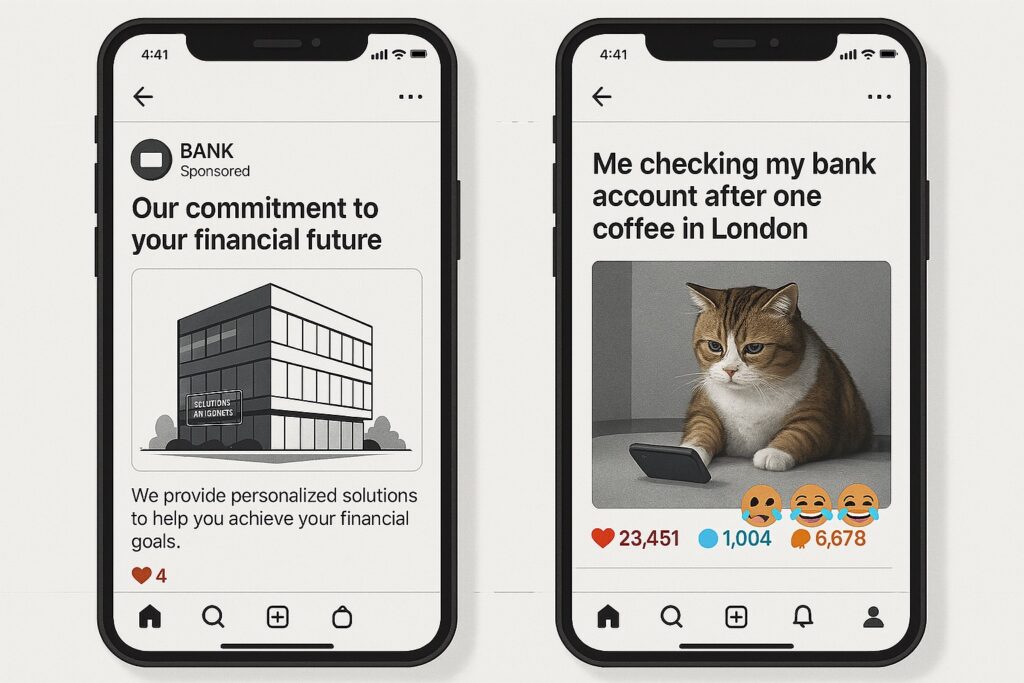
Memes offer a solution to a persistent problem in digital advertising: the failure to capture attention. Their familiar formats and accessible humour render them visually arresting. In environments where consumers scroll rapidly past polished creative, a crudely captioned image can stand out precisely because of its informality.
There is also a quantitative case. Reddit’s Business division reported a 50% uplift in click-through rates on meme-based ads versus conventional creatives. Other studies suggest that meme content generates significantly more organic engagement and can outperform traditional formats by up to tenfold in visibility and reach.
Perhaps most crucially, memes confer a sense of cultural fluency. When used appropriately, they suggest that a brand not only understands the internet but belongs to it. In a media environment where authenticity is increasingly prized, belonging matters.
Risks and Reputational Trade-Offs
Yet meme marketing is far from risk-free. It operates at the mercy of cultural tides, where what is amusing one day may appear gauche or outdated the next. The lifecycle of a meme is short. Deploying one even a week too late can damage rather than enhance a brand’s reputation.
The risk is not only one of timing. Humour, especially when repurposed for commercial ends, can misfire. What appeals to a younger demographic may alienate an older one. References that resonate in one market may confuse or offend in another. And while most memes circulate freely, those derived from copyrighted material, such as a film still or celebrity image, can expose brands to legal scrutiny if not sufficiently adapted.
Memes also risk diluting brand identity. A meme that fails to integrate tone of voice or visual branding may earn attention, but leave consumers unaware of its source. In such cases, the content may go viral, but the brand message does not.
Finance, with a Sense of Humour
Despite these risks, several financial institutions have integrated memes into their communications with considerable success.
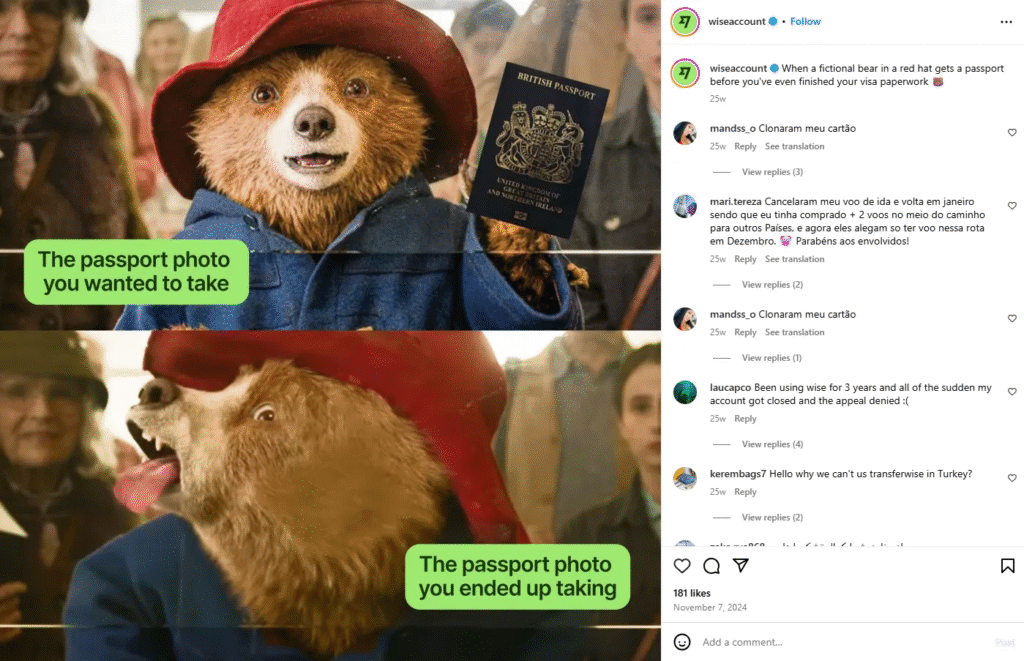
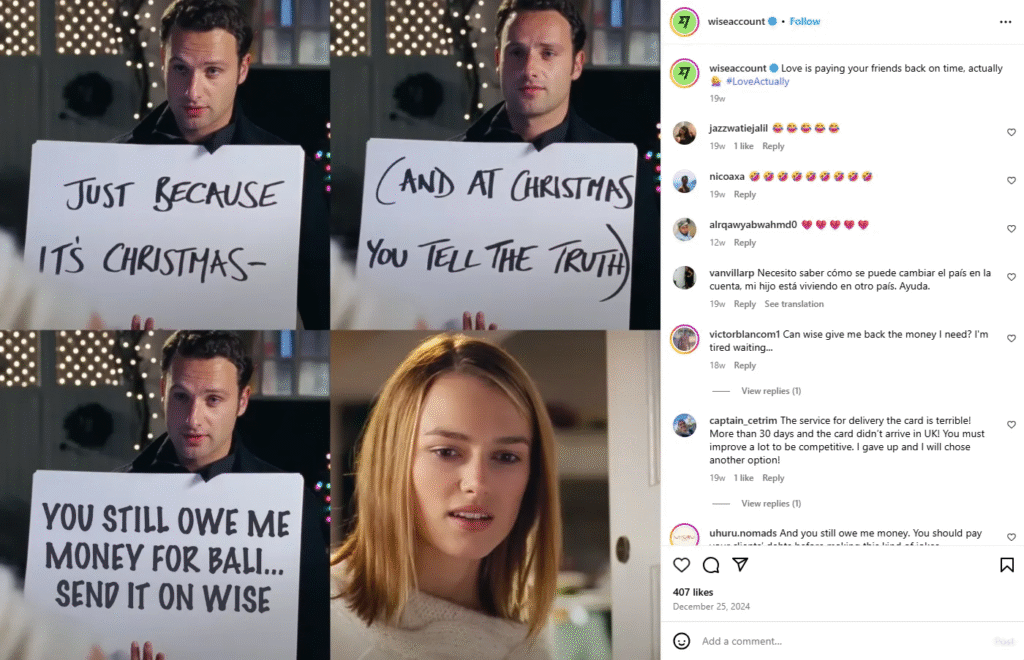
Wise (UK) has proved adept at embedding product references into culturally resonant meme formats. Its use of a scene from Love Actually, with a placard reading “You still owe me money for Bali… send it on Wise”, marries brand utility with seasonal familiarity. Another creative, featuring contrasting stills from Squid Game, highlights the gulf between holiday dreams and budgetary reality. A third, showing Paddington Bear holding a passport, juxtaposes expectations versus the photographic result—an all-too-familiar frustration for international travellers.
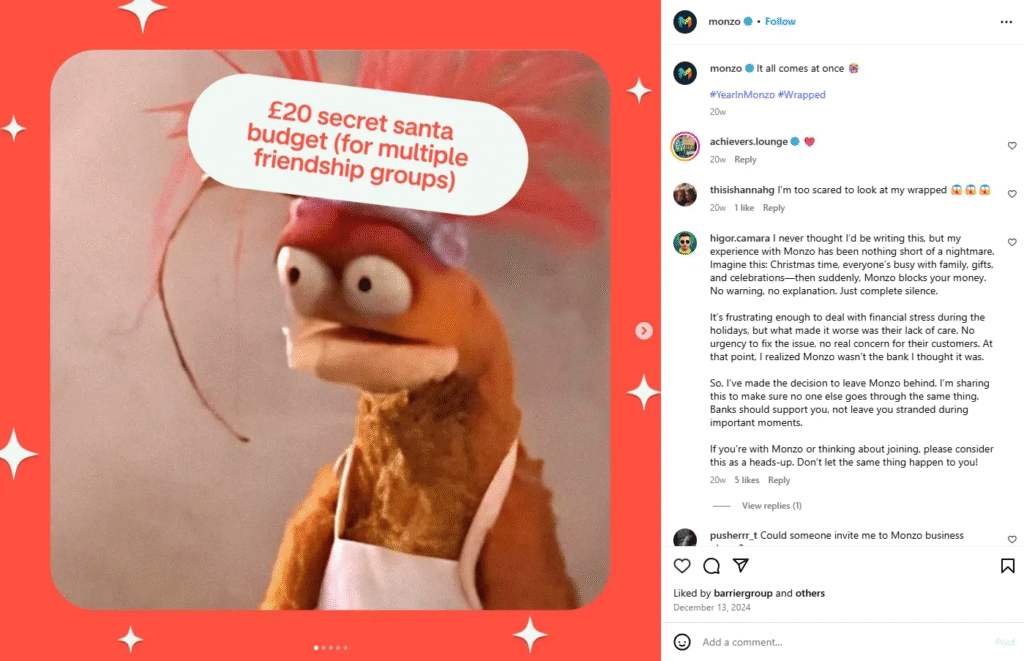
Monzo (UK) has taken a different approach, blending pop-cultural references with financial commentary. One campaign featured a Muppet character in a state of wide-eyed alarm over a £20 Secret Santa budget—a relatable nod to December’s seasonal overreach.
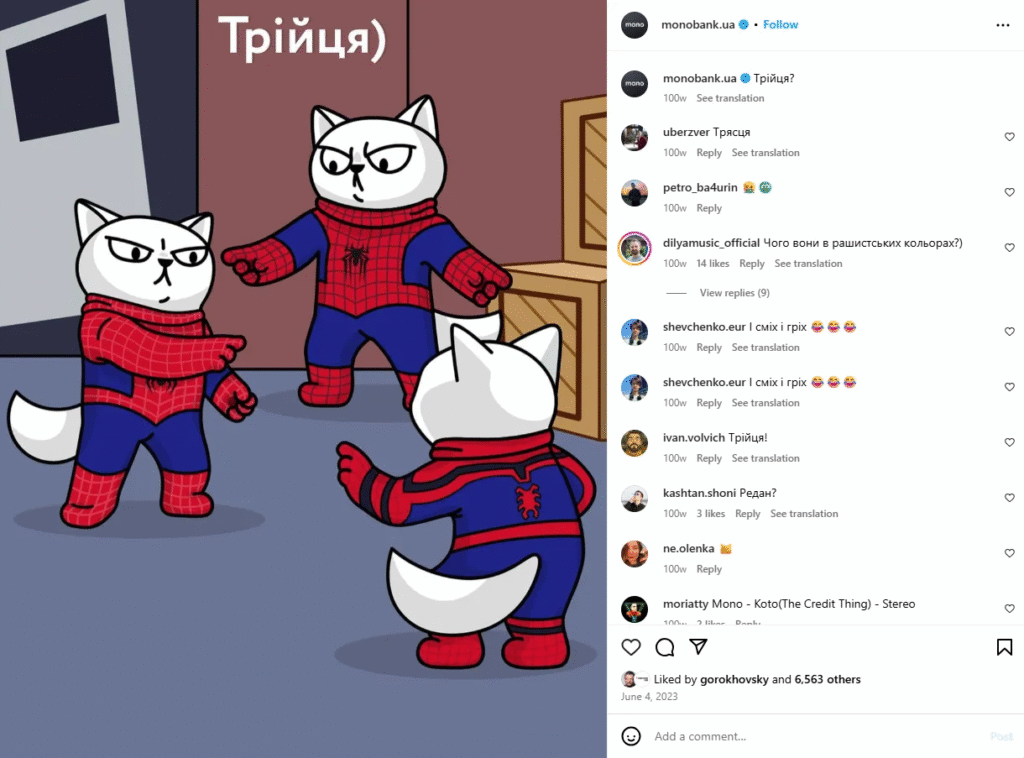
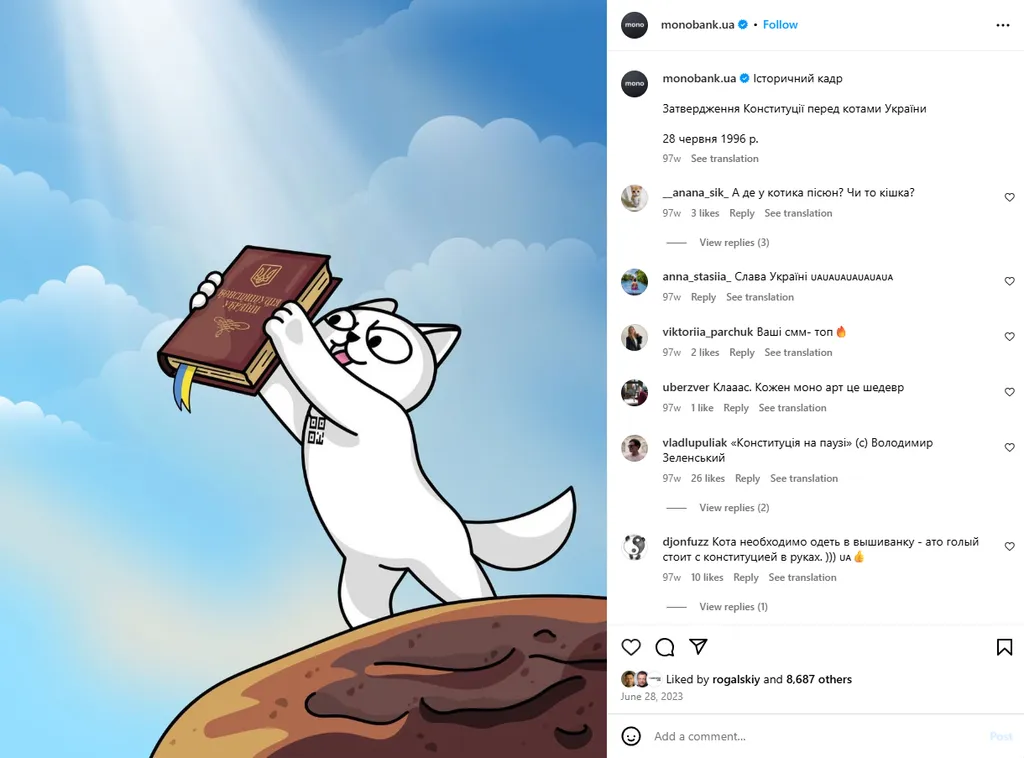
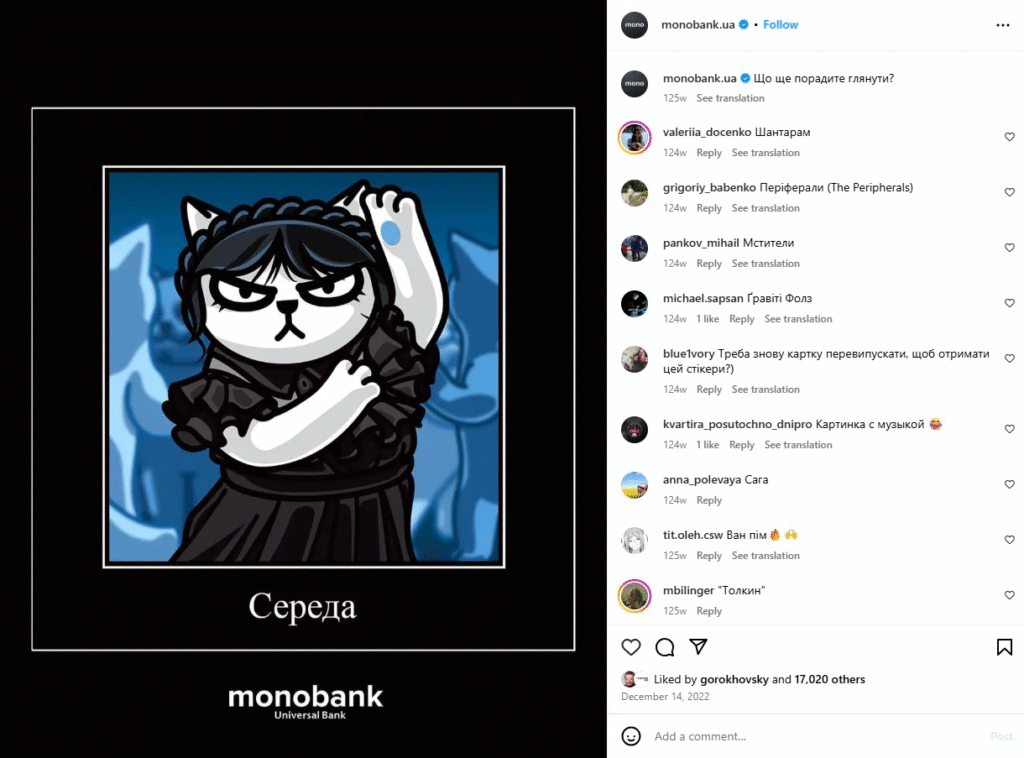
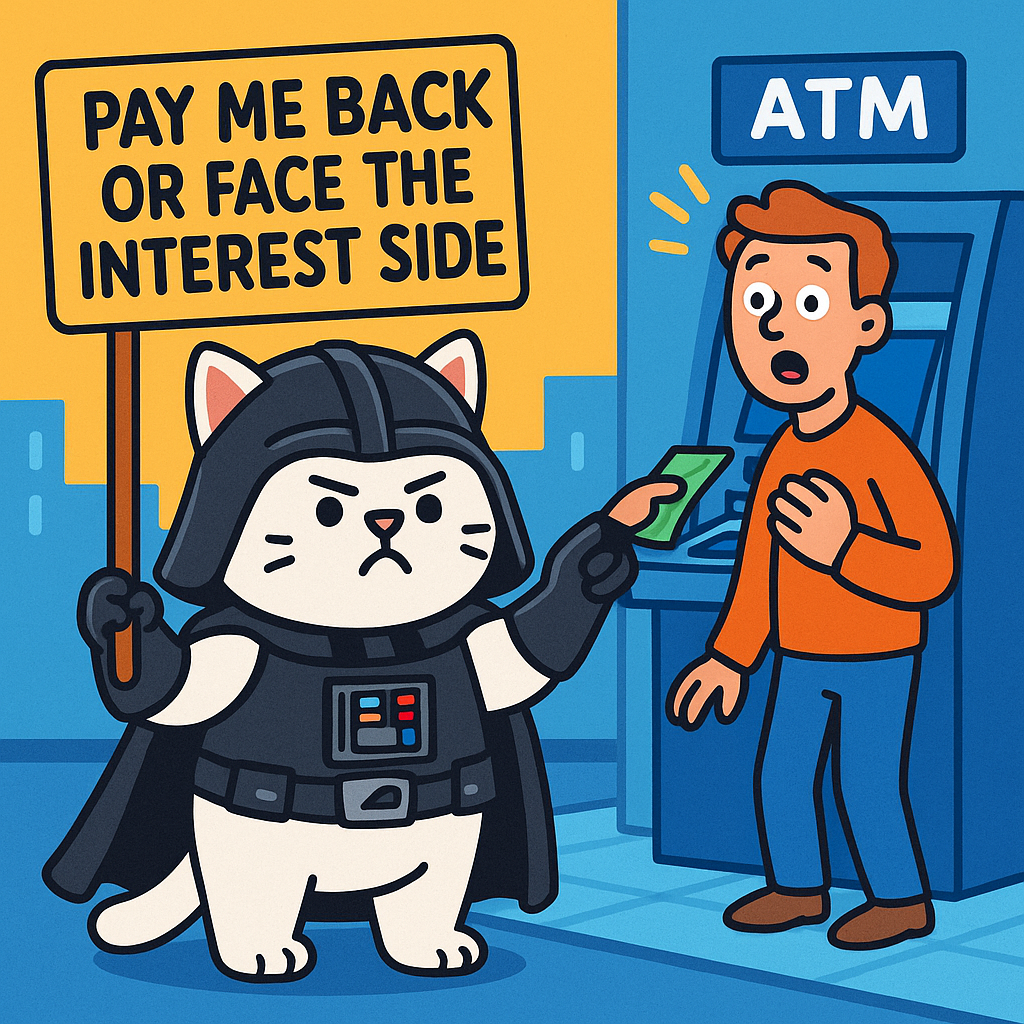
Monobank (Ukraine), meanwhile, has gone further, establishing a recurring character—a white cartoon cat—as the face of its meme-driven strategy. The mascot has become a vessel for timely cultural commentary: reenacting The Lion King to mark Constitution Day, spoofing Spider-Man’s mirror-image meme for Trinity Sunday, and adopting the aesthetic of Wednesday Addams to mark midweek. These campaigns regularly generate thousands of likes and comments, suggesting both reach and resonance.
Memes as Media Units
The advertising platforms themselves—Google and Meta—are well suited to meme deployment.
In Google’s Discovery and Performance Max campaigns, memes operate effectively as image-led units. Their native appearance makes them less likely to be dismissed as promotional. Meanwhile, on YouTube, memes can act as attention anchors in the opening seconds of skippable ads, delaying user disengagement.
On Meta platforms, where memes are endemic to the user experience, the format can blend so seamlessly into the feed that it delays the recognition of a post as advertising. Brands can therefore achieve engagement before the viewer realises they are being sold to.
That said, care is required. Meme success depends on cultural timing, visual clarity, and demographic relevance. Effective use also requires thoughtful targeting: jokes about developer life should be served to engineers, not end-users. Facebook’s A/B testing tools allow advertisers to test meme variants against more traditional formats—an essential safeguard given the format’s unpredictability.
Conclusion: The Laughter Dividend
Meme marketing is not a strategy for the risk-averse. It demands speed, contextual literacy, and a willingness to experiment. But for those who master the form, the rewards can be considerable: greater engagement, lower acquisition costs, and a brand identity that feels less like a bank and more like a companion.
In an industry often defined by opacity and restraint, humour has become a rare differentiator. And if a meme can elicit both a chuckle and a click, it may well be the most efficient creative asset money cannot buy—only understand.